Daniel 2: The Statue, the Stone, and the Kingdom That Fills the Earth
Six hundred years before Christ, a Babylonian king woke from a nightmare he couldn’t remember — and God used it to map every major world empire from that night until the return of Jesus. Here is what Daniel 2 actually says, what has already been fulfilled, and what is still coming.
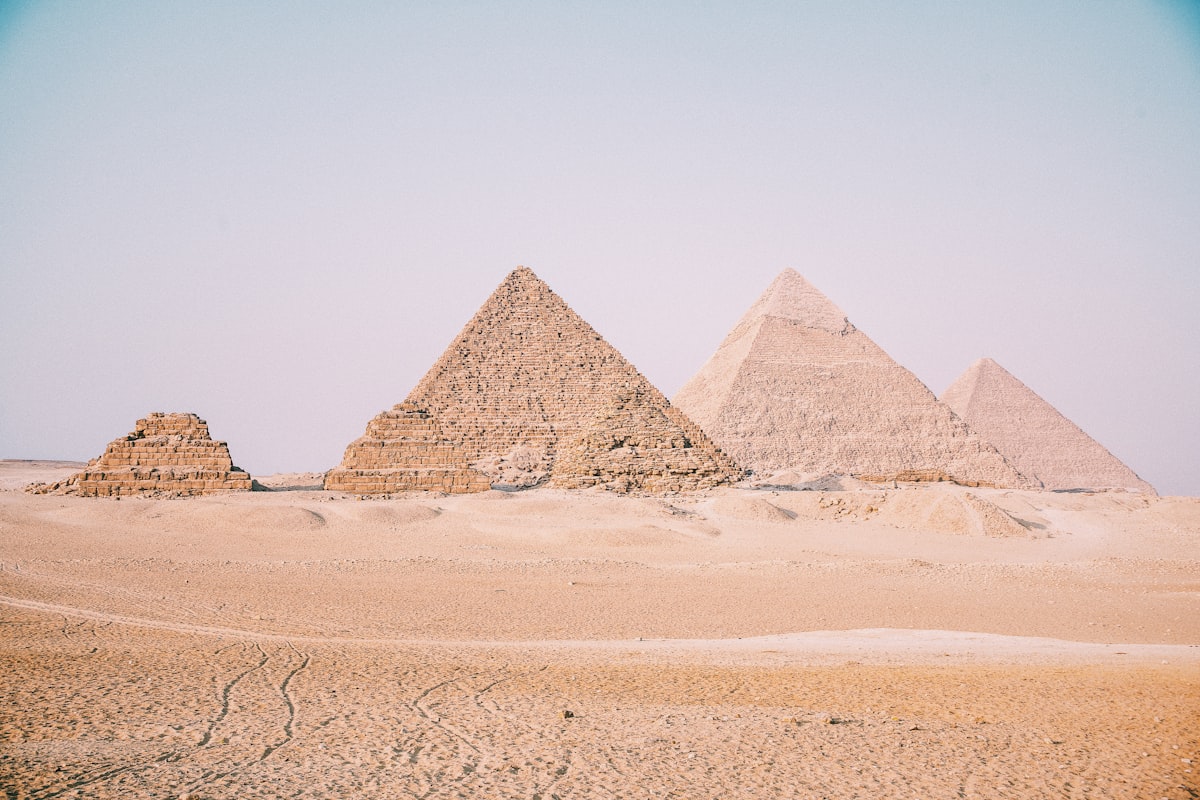
Every empire in human history has believed it would last forever. Daniel 2 was written before most of them existed — and mapped their end before their beginning.
In approximately 603 BC, Nebuchadnezzar — king of Babylon, conqueror of Jerusalem, the most powerful man alive — woke in the middle of the night in a cold sweat. He had dreamed something. He knew it was significant. He could not remember what it was. And the terror of it would not leave him.
He called his magicians, enchanters, sorcerers, and astrologers — the entire apparatus of Babylonian royal divination — and issued them an impossible demand: tell me both the dream and its interpretation. Not just the interpretation, which any clever court advisor could invent. The dream itself. He had decided, with the ruthless clarity of an absolute monarch, that anyone who could tell him what he had dreamed could be trusted to tell him what it meant. Anyone who couldn’t was useless to him — and would be executed.
They had no answer. No one did. The execution order was issued. Daniel and his three friends were on the list.
That night, Daniel prayed with Hananiah, Mishael, and Azariah. God revealed the dream. The next morning Daniel walked into the most powerful throne room on earth and told the king what he had seen in the dark — and what God said it meant. The interpretation he gave that morning has been unfolding, with documented precision, for twenty-six centuries.
The Dream Itself
What Nebuchadnezzar had seen was a statue — enormous, terrifying, brilliant. But it was not uniform. Each section was made of a different material, descending in value from head to foot: gold at the top, silver below, then bronze, then iron, then a mixture of iron and clay at the feet and toes.
Then a stone appeared — cut from a mountain, but not by human hands. It struck the statue at its feet. The entire image — gold, silver, bronze, iron, clay — collapsed simultaneously into dust so fine that the wind blew it away without a trace. And the stone grew until it became a mountain that filled the entire earth.
“In the days of those kings, the God of heaven will set up a kingdom that shall never be destroyed, nor shall the kingdom be left to another people. It shall break in pieces all these kingdoms and bring them to an end, and it shall stand forever.”
“Just as you saw that a stone was cut from a mountain by no human hand, and that it broke in pieces the iron, the bronze, the clay, the silver, and the gold. A great God has made known to the king what shall be after this.”
What the Four Kingdoms Were
Daniel tells Nebuchadnezzar directly: you are the head of gold (Daniel 2:38). From there, the identifications follow the sequence of history with a precision that has led critics to argue — against all manuscript evidence — that Daniel must have been written after the fact. It was not. But the objection is itself a testimony to the text’s accuracy.
Three of these four kingdoms — Babylon, Medo-Persia, and Greece — have risen and fallen exactly as described. Rome is more complex. Its legs became its feet, and its feet became ten toes. And the ten toes have not yet appeared.
The Part That Hasn’t Happened Yet
This is where careful reading becomes essential — and where much popular prophecy teaching gets sloppy. Daniel does not say there are four kingdoms and then the stone. He describes a fifth form of the fourth kingdom: the ten toes of iron and clay, which Daniel 2 and Daniel 7 both associate with a final confederation of ten kings that will exist “in the days of those kings” when the stone strikes (Daniel 2:44).
Rome fell in AD 476. The ten-toed form of Rome — whatever political configuration it will take — has not yet appeared. Rome’s influence never died; it morphed into the Holy Roman Empire, into European Christendom, into the legal and political inheritance of every Western nation. But the specific ten-king structure described in Daniel 2 and elaborated in Daniel 7 is future.
The European Union is not necessarily the ten toes. It has more than ten members. Its structure changes. We do not know the final form of this confederation. What we can observe is that the geopolitical architecture of the Western world — built on Roman legal foundations, increasingly organized into regional blocs, searching for centralized governance — is the soil in which Daniel’s ten-king structure would most naturally grow.
We do not know the timeline. Between Rome’s fall in AD 476 and the appearance of the ten-king form, no specific duration is given. The gap could be long. It could close quickly. We watch the trajectory, not the calendar.
What we can say: Three of the four kingdoms have come and gone exactly as Daniel described. The fourth is in its intermediate form. The stone has not yet fallen. That means we are somewhere in the feet — closer to the end of the statue than to its beginning.
The Stone Cut Without Hands
The most important detail in the entire vision is not the statue. It is the stone. And the most important detail about the stone is how it is described: cut from a mountain without human hands.
This is not a political movement. It is not a reform. It is not a gradual moral improvement of society over time. It is a divine intervention — sudden, external, not of human origin — that simultaneously destroys every remaining trace of human imperial power and replaces it entirely with a kingdom of a completely different kind.
This has enormous implications for how Christians engage with politics and culture. The Kingdom of God is not built through election cycles, court appointments, or cultural influence — however important faithful engagement in those arenas may be. It arrives through the direct act of God, at the time he has appointed, in a form no human committee planned. We are called to be faithful in the present order. We are not called to build the stone. The stone builds itself — and it is already cut.
One Story Told Across the Whole Canon
Daniel 2 does not stand alone. It is the first chapter of a story that runs through the entire prophetic literature of both Testaments.
Daniel 7 revisits the same sequence with different imagery — four beasts rising from the sea, each more terrible than the last, culminating in a ten-horned beast and an “Ancient of Days” who takes his seat in judgment and gives the kingdom to “one like a son of man” (Daniel 7:13–14). Jesus used this exact language when asked if he was the Messiah (Matthew 26:64).
Revelation 17–19 describes the same final empire — ten kings who give their authority to the beast — and the same divine intervention: the rider on the white horse whose name is “King of kings and Lord of lords” (Revelation 19:16), arriving not by election but by conquest.
Zechariah 14 pictures all nations gathered against Jerusalem before “the Lord my God will come, and all the holy ones with him” (v. 5). Same day. Same intervention. Same God who has been announcing this outcome since the reign of Nebuchadnezzar.
Six hundred years before Christ, in a Babylonian palace, God drew the map of human history from that night to the end. Every empire on that map has appeared, played its role, and passed away — exactly as described. One empire remains in its final form. One stone waits to fall.
The Only Kingdom That Lasts
Nebuchadnezzar’s response to Daniel’s interpretation is one of the most striking moments in the book: “Truly, your God is God of gods and Lord of kings, and a revealer of mysteries, for you have been able to reveal this mystery” (Daniel 2:47). The most powerful man on earth, having heard the map of his own empire’s end, falls on his face before the God who drew it.
That is the invitation Daniel 2 extends to every reader. Not date-setting. Not political calculation. Not anxiety about which bloc of nations represents the toes. The invitation is to behold the God who declared the end from the beginning — who named empires before they existed, mapped their falls before they rose, and announced the kingdom that would replace them all before a single king of any of them had drawn his first breath.
“Blessed be the name of God forever and ever, to whom belong wisdom and might. He changes times and seasons; he removes kings and sets up kings; he gives wisdom to the wise and knowledge to those who have understanding.”
The stone is coming. It was cut before history began. And no statue, however impressive, however golden, however much it fills the headlines — no empire, no alliance, no political movement, no economic system — will still be standing when it arrives. The mountain that fills the earth belongs to a different King. And that King has been announcing his plans, in considerable detail, for a very long time.
Don’t miss the next article in this series.
New Prophecy Watch articles, sermons, and devotionals delivered free every week. No cost. No spam. Just Scripture and truth.
Subscribe Free →